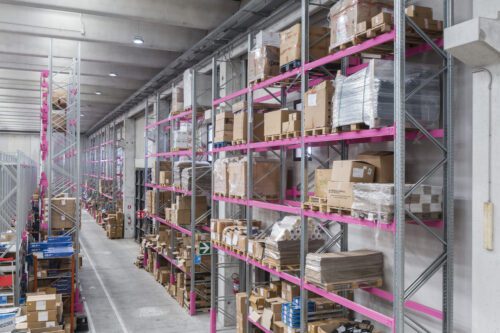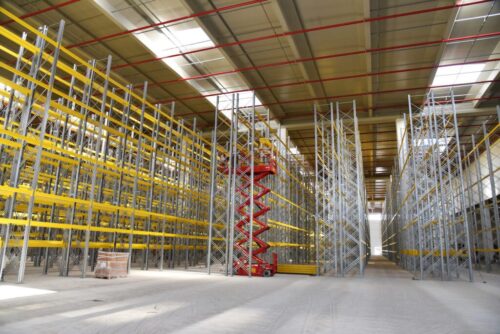
When discussing warehouse workplace safety, industrial racking systems cannot be considered merely support structures. They are an integral part of daily operations and, if not properly managed, can become a risk factor for people, goods, and operational continuity.
For this reason, the UNI EN 15635:2009 standard introduces the PRSES, the figure responsible for shelving safety and proper warehouse management. Their role is to oversee the use, inspection, and maintenance of industrial racking systems, helping to keep the warehouse safe and efficient.
Who is the PRSES?
The PRSES (Person Responsible for Storage Equipment Safety) is the individual responsible for the safety of storage equipment, whose designation is the responsibility of the racking user.
Basically, this is the person appointed by the company to monitor racking conditions and ensure that systems are properly used, inspected, and maintained. The UNI EN 15635 standard assigns this role a central function in damage prevention and warehouse safety management.
To perform this role, the PRSES must be familiar with:
- the types of racking systems used in the facility;
- warehouse operating procedures;
- main risks related to impacts, overloading, improper modifications, and wear;
- inspection procedures and anomaly reporting.
PRSES: duties and responsibilities
The PRSES has both an operational and coordination role. They do not simply “check” shelving systems but organise a continuous inspection system to promptly identify damage, non-compliance, and risk conditions.
Their activities include managing inspections, which are divided into:
- visual inspections
- technical inspections
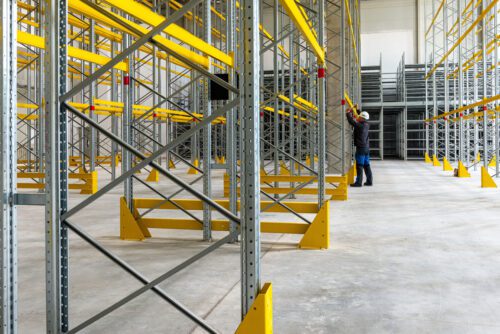
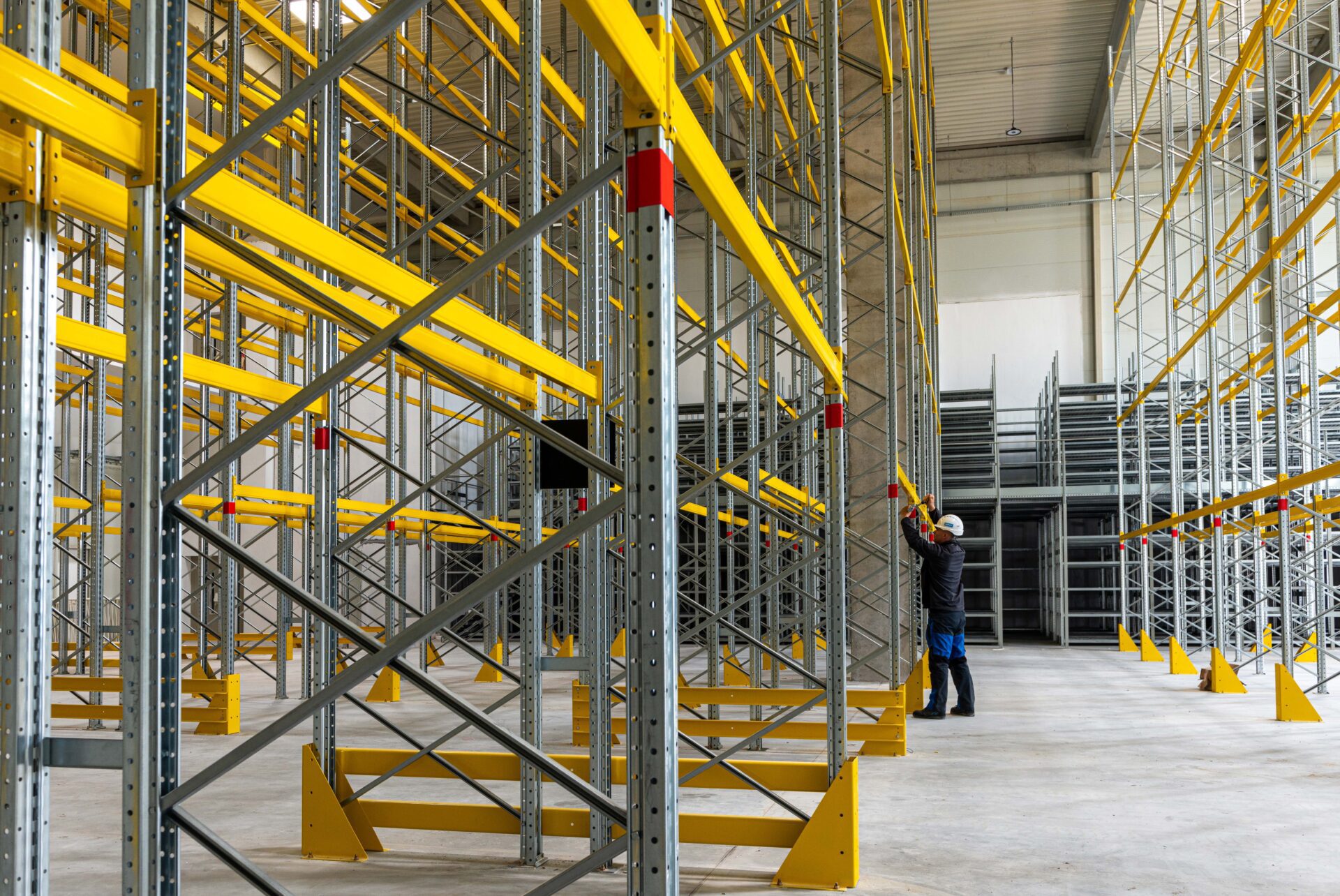
Visual inspections must be carried out regularly, generally on a weekly basis, directly by the PRSES, to monitor warehouse safety conditions.
On the other hand, technical inspections are carried out by a qualified specialist inspector who performs a thorough annual analysis of each racking component. At the end of the inspection, a detailed report must be provided to the PRSES, outlining any critical issues and required actions.
The PRSES is responsible for:
- verifying over time that warehouse conditions comply with the original design specifications;
- identifying and recording damage or anomalies, activating corrective actions promptly;
- coordinating with users and suppliers for proper racking management;
- ensuring adequate training of warehouse personnel;
- defining inspection frequency based on operational conditions and risk level.
In other words, the PRSES is the internal reference figure for industrial racking safety.
Is the PRSES mandatory?
According to UNI EN 15635, the PRSES is mandatory for companies which use industrial shelving. The PRSES must be appointed by the employer and acts as the reference figure for storage equipment safety. Their role is to supervise racking conditions, carry out periodic inspections, and manage risks in a structured way.
In practical terms, the PRSES is essential to:
– structure inspection processes;
– reduce the risk of accidents;
– improve traceability of inspections;
– support safer and more efficient warehouse management.
Who can act as PRSES?
The role can be assigned to different profiles, either internal or external to the company, provided they have adequate expertise in storage systems and operational contexts.
Examples include:
- internal staff such as warehouse or logistics managers;
- company personnel with safety expertise;
- external consultants or specialised professionals.
What matters most is not formal qualification, but the ability to understand racking systems, identify risk signals, and properly manage inspections.
PRSES education: skills and requirements
There isn’t a legally required certification to become a PRSES, but specific training is strongly recommended.
A proper training programme should cover:
– UNI EN 15635 standard;
– main types of industrial racking;
– visual inspection criteria;
– damage classification;
– non-conformity management;
– warehouse safety procedures.
Adequate training allows the PRSES to detect issues early, organise inspections effectively, and communicate efficiently with technicians, maintenance staff, and suppliers.
Why the PRSES is essential for warehouse safety
Appointing a PRSES is not just about complying with a technical standard. It means introducing a figure that helps prevent structural issues, reduce operational risks, and maintain control over racking conditions over time.
This approach delivers tangible benefits:
- improved operator safety;
- reduced probability of severe structural damage;
- better maintenance planning;
- increased operational continuity;
- more organised documentation and inspections.
Conclusions
The PRSES is a key figure in managing the safety of industrial racking systems. Their presence allows structured inspections, coordination of technical checks, and timely intervention in case of damage or anomalies.
For companies using storage systems, correctly identifying and supporting this role is essential to improve warehouse safety and protect efficiency, people, and structures over time.
Do you need support for the safety of your industrial shelving?
ROSSS supports companies in the design, inspection, and management of industrial metal shelving, with technical solutions aimed at improving safety, reliability, and operational continuity.
Contact us for a personalised technical consultation.