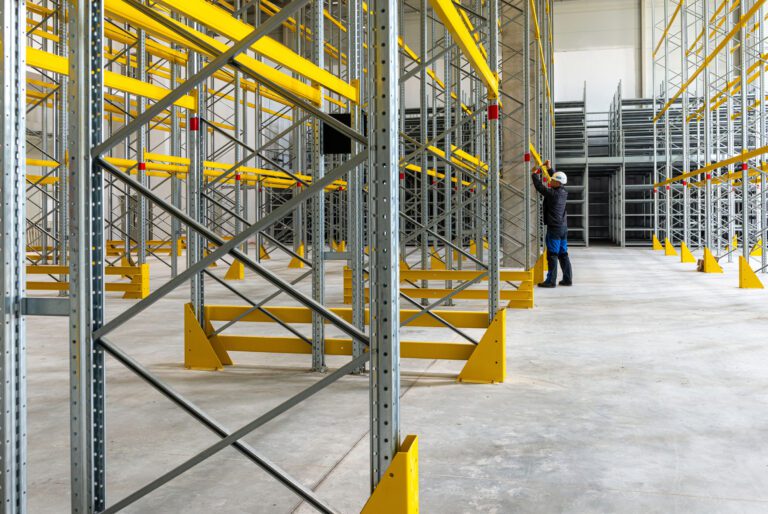
Designing an industrial warehouse is one of the most strategic processes to ensure logistical efficiency, operational safety, and optimal use of space. A well-designed warehouse increases productivity, reduces handling costs, and allows companies to efficiently manage internal flows.
In addition to being the beating heart of a company, the warehouse is also the most concrete expression of service efficiency offered to customers.
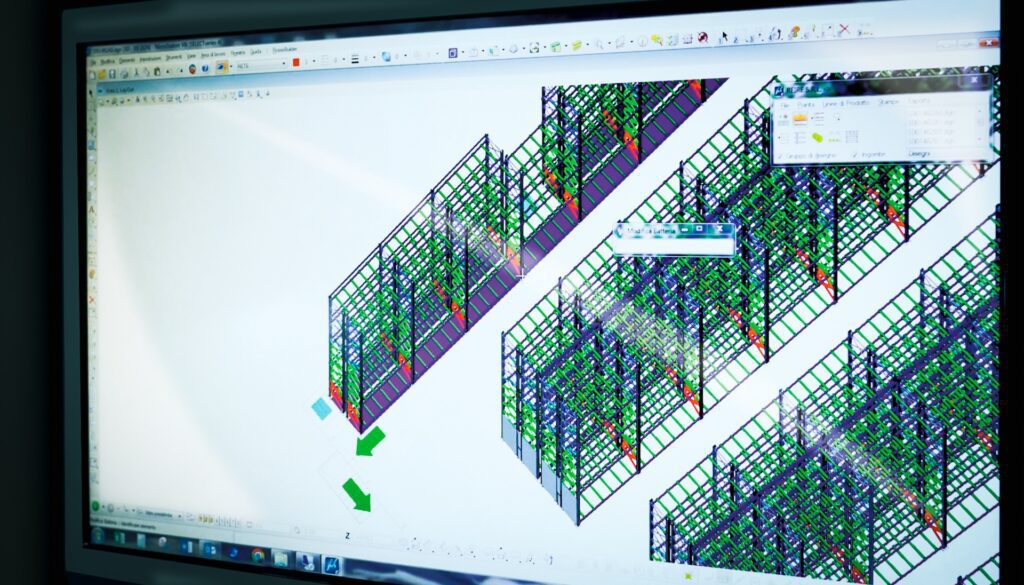
To achieve high levels of productivity, every company must start with an efficient warehouse design. The design phase is not only the starting point to develop a new warehouse, but also the most strategic aspect: the designer must be able to shape the structure according to the customer’s specific needs.
Designing a warehouse does not mean applying standard solutions, but defining a tailor-made system based on three key elements:
- Product: technical characteristics of the load units and storage requirements
- Handling flows: internal loading and unloading flows
- Space and accessibility: available surfaces, heights, and expansion possibilities
Every design decision derives from the combination of these three aspects. In this guide, we explore how to design a warehouse, how to structure an efficient warehouse layout, which storage systems to choose, and which standards must be respected.
How to Design an Effective Industrial Warehouse Layout: Product, Flows, Space and Accessibility
1. Product
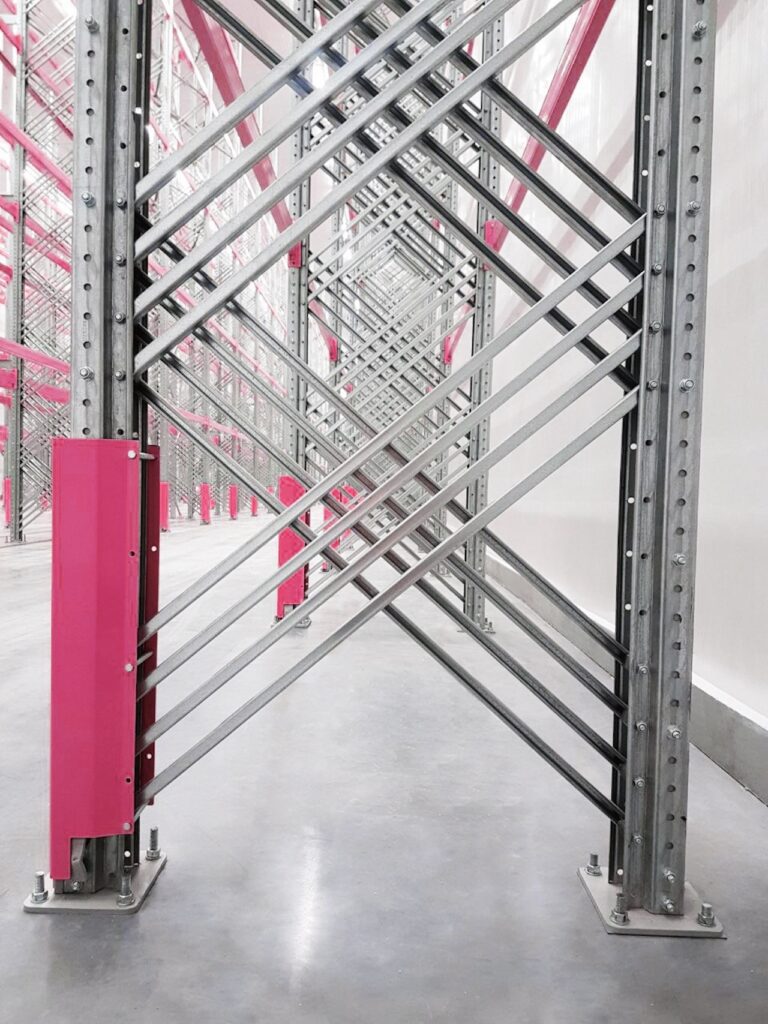
Warehouse design begins with the analysis of the goods to be stored. Each kind of product requires specific solutions in terms of industrial shelving, load capacity, accessibility and storage systems.
Key variables include:
- Weight of the goods → defines the required load capacity of the racking. Heavy loads require heavyweight shelving; medium-light loads may use lightweight shelving.
- Volume → bulky load units require customised storage systems, possibly with integrated accessories (e.g., continuous decking for irregular or oversized load units).
- Pallet dimensions → if goods are stored on pallets, the levels will be designed accordingly (e.g., 800×1200 mm, 1000×1200 mm).
- Number of references/SKUs → the number and variety of SKUs determines the most functional warehouse layout. Many references require selective pallet racking; fewer SKUs allow dedicated aisles and systems such as pallet shuttle.
- Storage conditions → specific technologies such as temperature control, nitrogen systems, etc.
2. Handling Flows
Flows define the dynamics of warehouse operations:
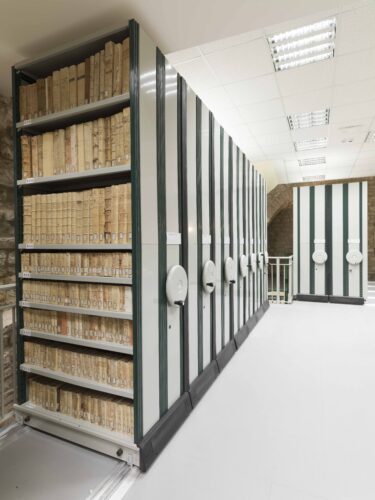
- How much the goods move: handling frequency determines the turnover rate. Food or pharmaceutical products have high turnover; archives or slow-moving materials have low turnover. Shelving must be selected accordingly.
- How goods move: loading and picking operations may require specific handling equipment (e.g., trilateral trucks), automated systems (stacker cranes, AGVs, AMRs) or semi-automated solutions (shuttles). The chosen technology must be fully integrated within the project, so as to get an efficient and fluid handling.
- Where goods move: physical arrangement of flows inside the warehouse. Each area must ensure logical and safe pathways. Goods must circulate with minimal obstacles, in order to significantly reduce downtime and risks of interference between men and machines.
An efficient layout includes dedicated pathways for each activity—receiving, storage, picking, and shipping—to optimise space, simplify daily operations, and increase productivity.
3. Space and Accessibility
Space is the third pillar of warehouse design, representing the meeting point between efficiency and safety. Every square metre must be used optimally while ensuring ease of access and smooth movement.
Space planning begins with analysing:
- available surface
- clear height
- structural constraints
- logistic requirements
Correct space organisation ensures both operational efficiency and maximum safety.
Warehouse Layout: How to Structure an Industrial Warehouse
A well-designed warehouse includes interconnected functional areas:
- Separate entrances and exits: positioned to minimise congestion and separate inbound/outbound flows
- Loading/unloading areas: easily accessible for trucks, located in dedicated spaces or integrated via loading bays
- Receiving area: for quality and quantity checks of incoming goods
- Storage area: the core of the warehouse, equipped with suitable racking to maximise capacity and safety
- Order picking area: for fast picking and packing operations
- Shipping area: near the exits, managing final loading operations
A proper configuration ensures logical flows, safer movements and adequate workspaces, enabling efficient management and full integration of all logistics processes.
Storage Systems: Main Solutions
The choice of industrial shelving determines storage capacity and efficiency, influencing the warehouse layout.
Main systems include:
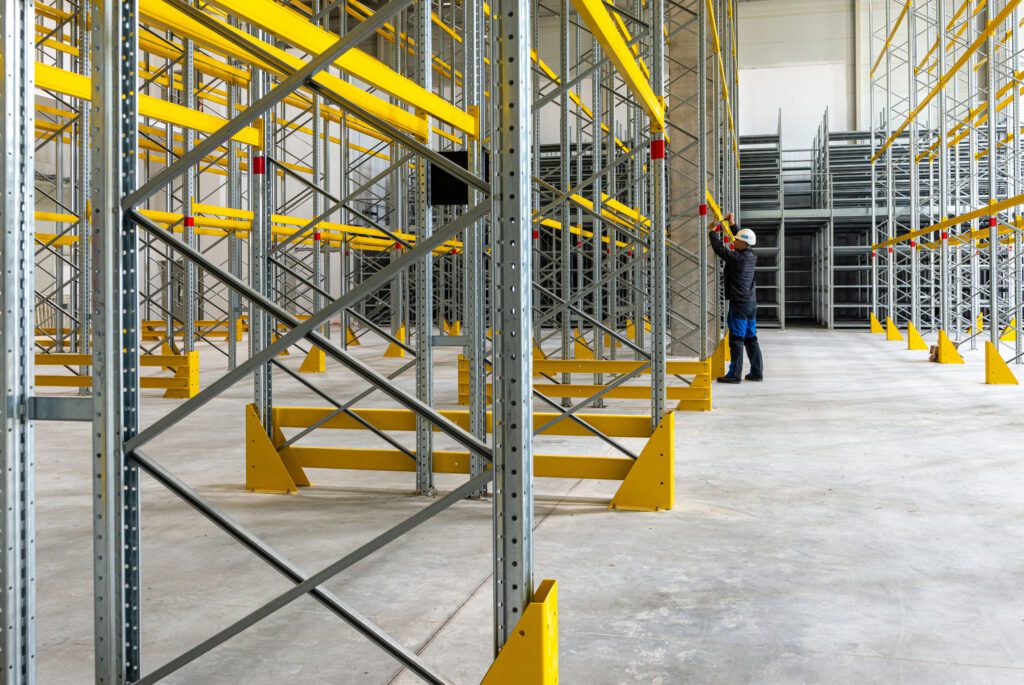
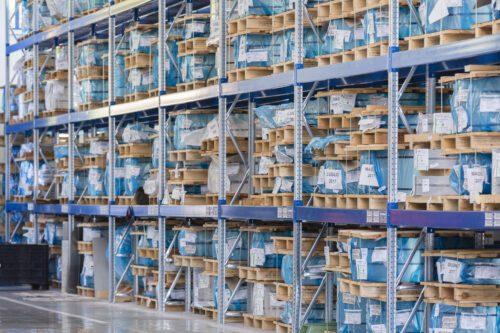
– Traditional Pallet Rack
High accessibility and flexible configuration. Ideal for high-turnover loads of various sizes.
– Pallet Shuttle
A high-density storage solution. Semi-automatic handling optimises space utilisation.
– Cantilever
Designed for long or bulky items (tubes, sheets, profiles).
– Self-Supporting Shelving
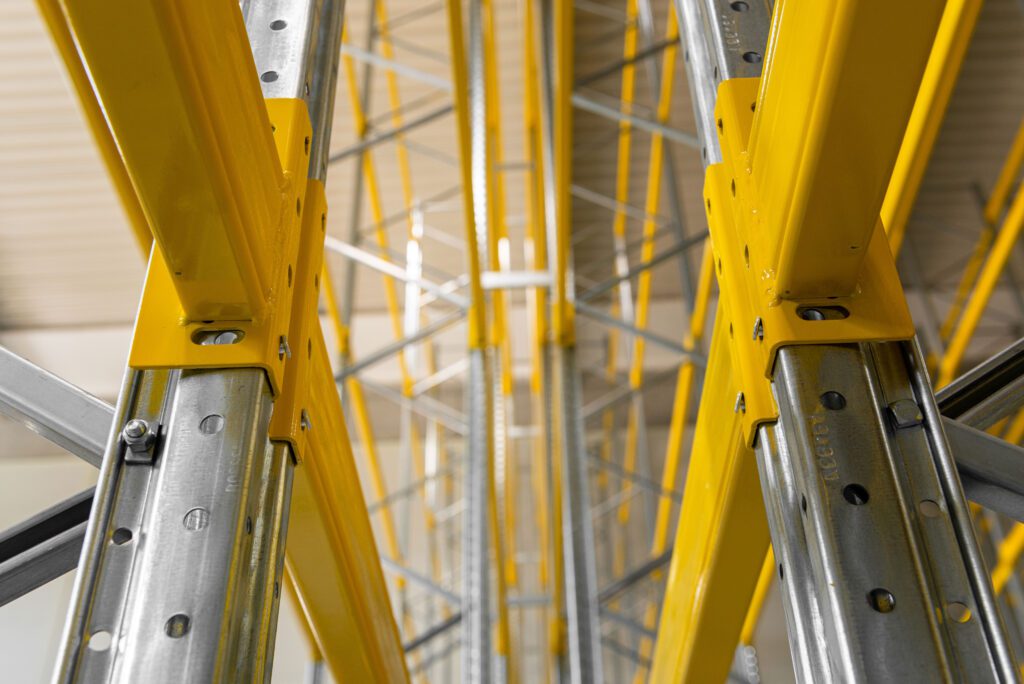
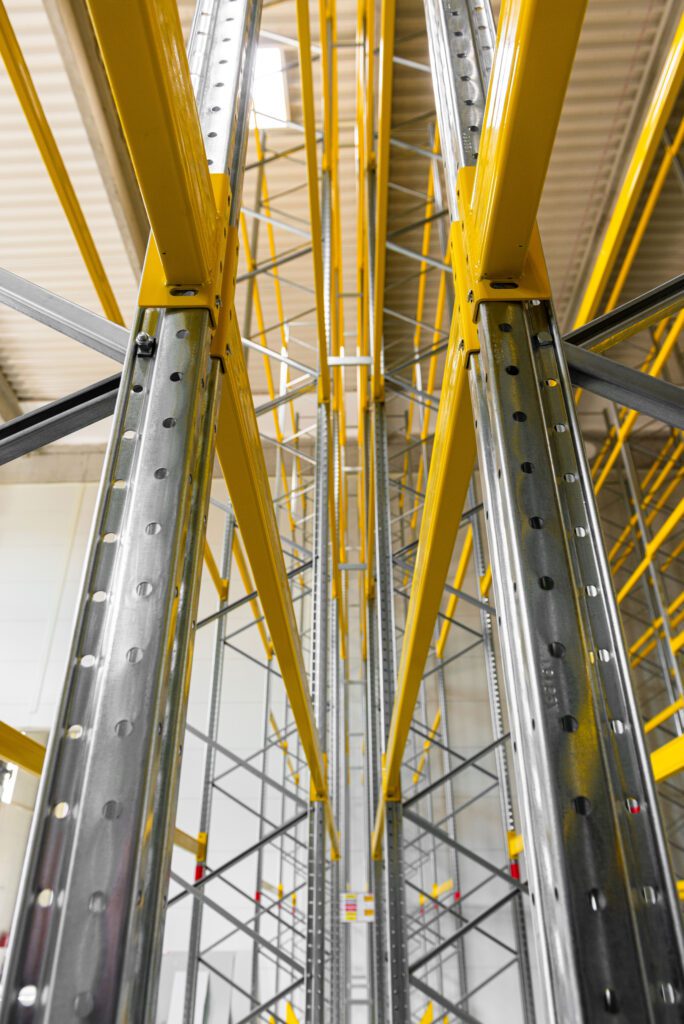
Structures that support the building envelope itself: extremely high capacity, ideal for complex projects.
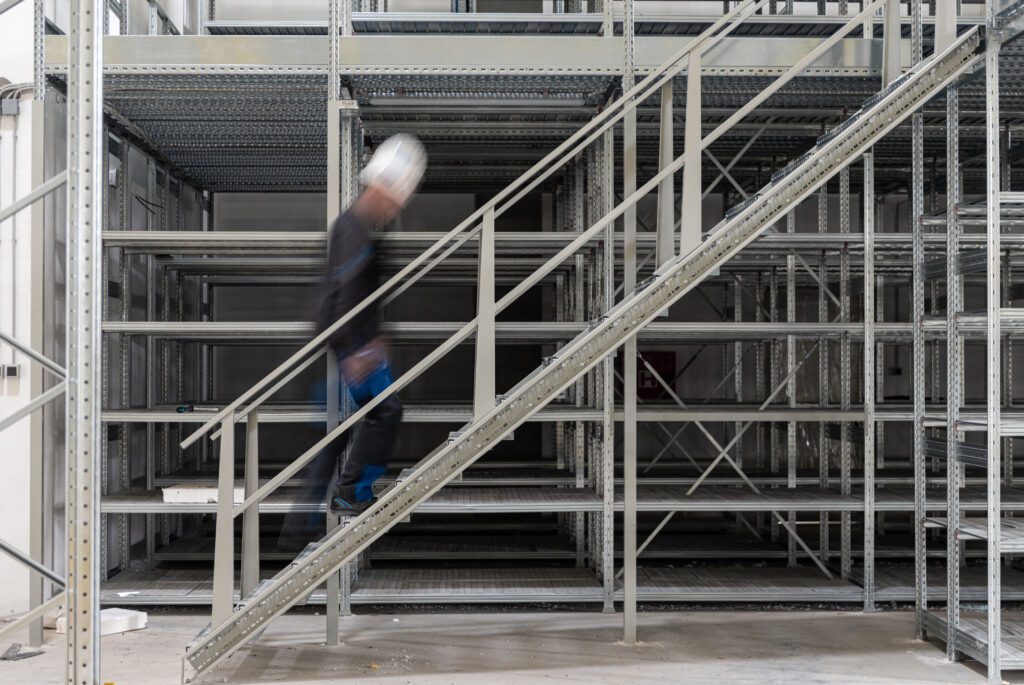
– Industrial Mezzanines
Allow vertical space optimisation by creating additional walkable levels. Ideal for expanding operational areas without enlarging the building.
– Automated Warehouses
Highly efficient systems using robotics, stacker cranes or other automated technologies. They ensure maximum density, zero errors and real-time stock control—ideal for high-turnover and just-in-time operations.
Safety and Standards in Industrial Warehouse Design
Safety is essential in designing and managing industrial storage systems. In Europe, metal shelving must comply with UNI EN 15512, UNI EN 15620, UNI EN 15629, UNI EN 15635, and UNI EN 16681 standards, which define the requirements for design, installation, use and maintenance.
Key safety aspects include:
– Seismic risk assessment
Racking must be designed based on local seismicity, with dedicated structural solutions and certified seismic calculations.
– Fire prevention
Layout, materials and protections must integrate with the fire prevention plan, ensuring clear evacuation routes and effective sprinkler coverage.
– Scheduled maintenance and inspections
Regulations require periodic inspections and recording of all non-conformities. Timely interventions on damaged shelving prevent long-term stability issues.
Responsible design, continuous inspections, and operator training are essential to create a truly safe and efficient warehouse.
Do You Need a Custom-Designed Industrial Warehouse?
At ROSSS, we develop tailor-made solutions fully compliant with regulations, combining safety, innovation and logistical efficiency.
Contact us for a personalised technical consultation.