The effects of seismic events on storage equipment are among the key factors to be considered when assessing risks in the workplace. For this reason, it is crucial to implement appropriate safety measures to mitigate these hazards as much as possible, as provided for by the applicable regulations.
These structures, specifically designed to withstand the stresses generated by an earthquake, represent a strategic choice for those seeking to protect goods, facilities, and above all, people.
Anti-seismic Shelving: Why is it important?
When designing a warehouse or investing in new industrial metal shelving, it is essential to consider the geological context and the seismic risk levels of the area.
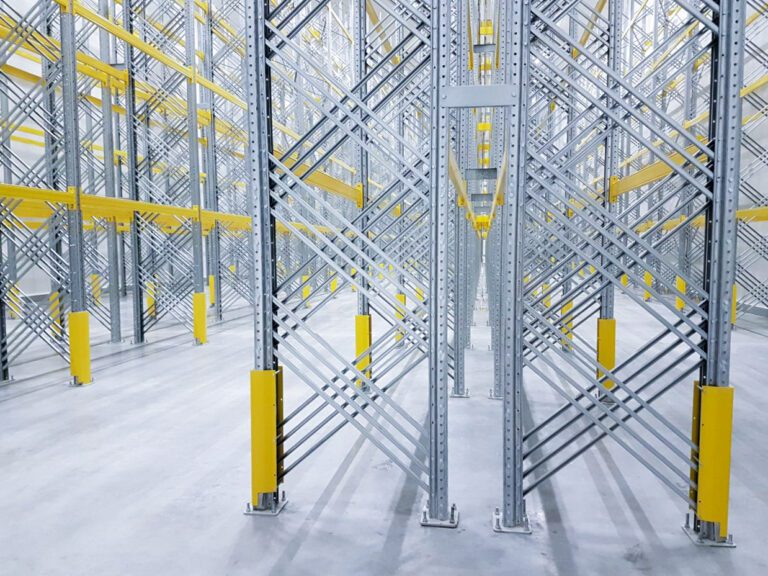
Anti-seismic shelving is designed to:
- prevent collapse or damage to structures during an earthquake;
- protect stored goods;
- safeguard the safety of personnel;
This kind of equipment is not only a response to current regulations, but also a genuine expression of corporate responsibility. Several studies and regulatory updates show that anti–seismic shelving is the right solution to reduce the impact of seismic risk.
Seismic Risk: What Does it Mean?
Italy has a medium-to-high seismic risk hazard (in terms of frequency and intensity), often significant vulnerability, and a very high exposure to potential damage. Therefore, it is a territory exposed to an elevated seismic risk, requiring ongoing efforts in prevention, maintenance, and upgrading of structures to ensure the safety of people and goods — including anti-seismic shelving.
Seismic risk is the estimated damage expected in case of an earthquake. This value can be calculated by using three parameters:
- Seismic Hazard (P): the probability that a seismic event with specific characteristics will occur in a given area within a certain period (called return period). This is a variable and unmodifiable factor, derived from official seismic hazard maps defined at national and regional levels. It is site-specific.
- Seismic Vulnerability (V): the tendency of a structure to suffer a certain level of damage when subject to a seismic event of a given intensity. It is a feature of the building.
- Exposure (E): the potential level of damage in economic terms, human lives, and cultural or architectural heritage. It is linked to the nature of activities carried out.
Seismic risk (R) is the product of these three parameters: R = P x V x E
Modular Shelving System with Anti-Seismic Criteria
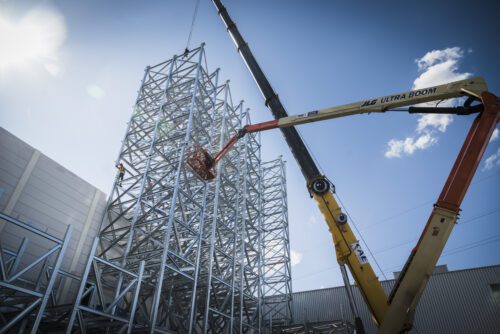
Let’s see which are the storage systems that can be designed with anti–seismic criteria:
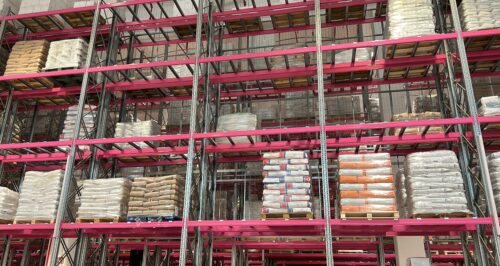
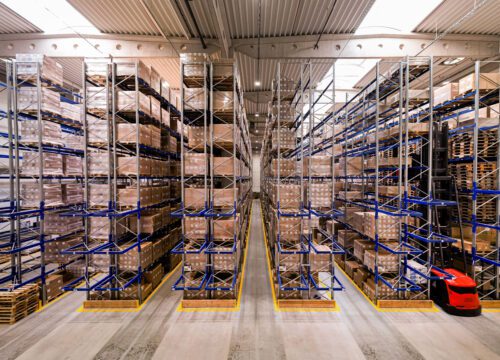
- Pallet racks
- Semi-automated systems with shuttles
- Cantilever
- Automated warehouses
- Industrial mezzanines
It is essential that the structural design of these systems is handled by engineers with proven expertise in seismic structural calculation.
How to know if you are in a seismic risk zone?
To assess the seismic risk level of a specific area, it is possible to consult the PGA (Peak Ground Acceleration) or AG/G value, which indicates the maximum ground acceleration in the event of an earthquake.
This value changes depending on the geographical area and serves as a technical reference for the seismic design of shelving.
In Italy, an accurate overview of seismic parameters by area is available on the portal: https://www.mappasismica.amv.it/
Main Regulations
Anti-seismic shelving must comply with specific national and European standards, including:
- NTC 2018: Technical standards for construction (Italy-specific)
- Legislative Decree 81/08: Consolidated text on health and safety at work (Italy-specific)
- Decree of the President of the Higher Council of Public Works, Central Technical Service of 27/06/2023 – Approval of the Guideline for the design, execution, verification and securing of metal shelving (Italy-specific)
- INAIL – Technical Guide for the selection, use and maintenance (Italy-specific)
European standards:
- UNI EN 1990: general rules for structural design
- UNI EN 1993-1-1: Eurocode 3 – Design of steel structures – Part 1-1: General rules and rules for buildings
- UNI EN 1993-1-3: Eurocode 3 – Design of steel structures – Part 1-3: General rules – Supplementary rules for cold-formed members and sheeting
- UNI EN 1993-1-8: Eurocode 3 – Design of steel structures – Part 1-8: Design of joints
- UNI EN 15512: Steel static storage systems – Pallet racking – Principles for structural design
- UNI EN 15620:2009: Steel static storage systems – Pallet racking – Tolerances, deformations and clearances
- UNI EN 15635: Steel static storage systems – Use and maintenance of storage equipment
- UNI EN 15878: Steel static storage systems – Terms and definitions
- UNI EN 16681: Steel static storage systems – Pallet racking – Principles for seismic design
These standards define the criteria for design, execution, verification, and maintenance of metal shelving suitable for seismic environments.
Advantages of anti-seismic shelving include:
- Enhanced safety: protects goods, systems, and people;
- Regulatory compliance: reduces the risk of penalties and liability;
- Operational continuity: minimises damage and downtime in the event of a seismic event;
- Ethical value: represents a conscious and forward-thinking choice.
Post-Installation Phase: Maintenance and Inspections
The effectiveness of anti-seismic shelving does not end with installation. A maintenance and periodic inspection programme must be implemented. According to UNI EN 15635, each company must appoint an internal safety manager for its shelving, and rely on qualified technicians for regular inspections.
These activities help prevent damages, reduce the risk of business interruption, and maintain long-term structural reliability.
Conclusions
Choosing anti-seismic shelving systems is not just about complying with regulations — it is an ethical, strategic, and forward-looking decision to ensure safety, continuity, and the protection of company assets. For this reason, it is essential for any modern production facility to fully understand and correctly apply the regulations on anti-seismic shelving and be aware of the obligation to comply based on the geological area.
Need help designing a safe warehouse in a seismic zone? Contact us for a tailored technical consultation.