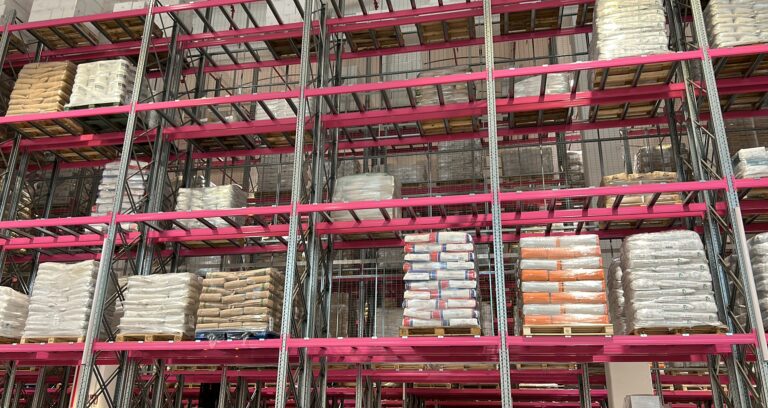
The seismic vulnerability of a metal shelving system is a key concept to analyse seismic risk. It specifies how resistant the structure is to the effects of an earthquake. How? By assessing potential damage based on the installation’s geographic location, design criteria, materials used, and any modifications made over time.
Several factors influence seismic vulnerability, including:
- Italian seismic classification: Italy is a country exposed to high seismicity, therefore it is crucial to limit damage risks for installations in high seismic hazard areas.
- Design and building: a design that does not consider seismic criteria and current seismic regulations exposes structures to significant and dangerous risks of damage.
- Materials used: using suitable materials and performing regular maintenance (e.g., according to UNI EN 15635) helps prevent structural deterioration.
- Modifications over time: changes from the original design can increase vulnerability – if not reassessed.
A proper seismic vulnerability assessment helps prevent damage to goods, equipment and, most importantly, protect people’s safety.
Reference standard in Italy: NTC 2018
Chapter 8 of the 2018 Technical Standards for Construction (NTC 2018) defines the criteria to assess and classify the seismic safety level of an existing structure.
The goal is to identify potential structural lacks and to plan:
- Seismic improvement interventions for shelving: increase the structure’s resistance to seismic events without necessarily reaching the levels required for new constructions.
- Seismic retrofit interventions for shelving: bring the structure to the safety levels required for new buildings, minimising risk.
Seismic vulnerability assessment procedure in Italy according to NTC 2018
According to NTC 2018, the seismic vulnerability assessment in Italy follows an organised procedure divided into six phases:
- Historical-critical analysis: reconstruction of the current stress state through design and technical documentation, combined with the reconstruction of the structure’s stress state over time.
- Knowledge survey: geometric and structural surveys to assess the actual condition and identify damage or deformations.
- Material characterisation: analysis of the mechanical properties of materials through on site or laboratory testing.
- Definition of the knowledge level (KL) and confidence factors: establishes the level of material knowledge, from minimum (KL1) to maximum (KL3), and the related confidence factors. KL1, KL2, and KL3 indicate the level of technical detail, and each level determines a confidence factor that affects the calculation safety margins.
- Structural analysis and determination of vulnerability: calculation of the vulnerability index and verification of compliance with the seismic requirements specified by the standard.
- Intervention proposal: if necessary, improvement or retrofitting measures are defined, including a cost-benefit assessment.
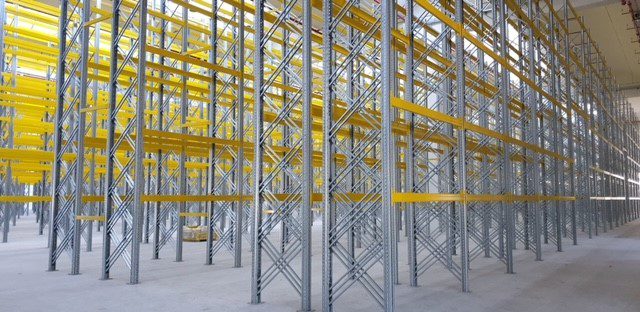
Seismic vulnerability indicators
The seismic vulnerability of a structure is expressed through a numerical index (from 0 to 1), which correlates:
- The structure’s resistance capacity
- The seismic actions defined by the standard
An index equal to or greater than 1 means the structure is compliant.
An index lower than 1 means retrofit or improvement actions are needed to reduce risk.
Practical observations and conclusions
Assessing the seismic vulnerability of industrial metal shelving requires specialised skills and a detailed analysis. During surveys or testing, it may be necessary to partially unload the racking systems to ensure safety conditions. After the assessment, any required targeted interventions can be planned.
In summary: managing seismic risk in warehouses and production sites requires a methodical approach, in compliance with NTC 2018. Moreover, it also needs cooperation between technicians, employers, and safety managers.
Assessing the seismic vulnerability of industrial metal shelving is an investment in prevention: it protects both structures and, above all, people.
Need help designing a safe warehouse in a seismic zone? Contact us for a tailored technical consultation.